
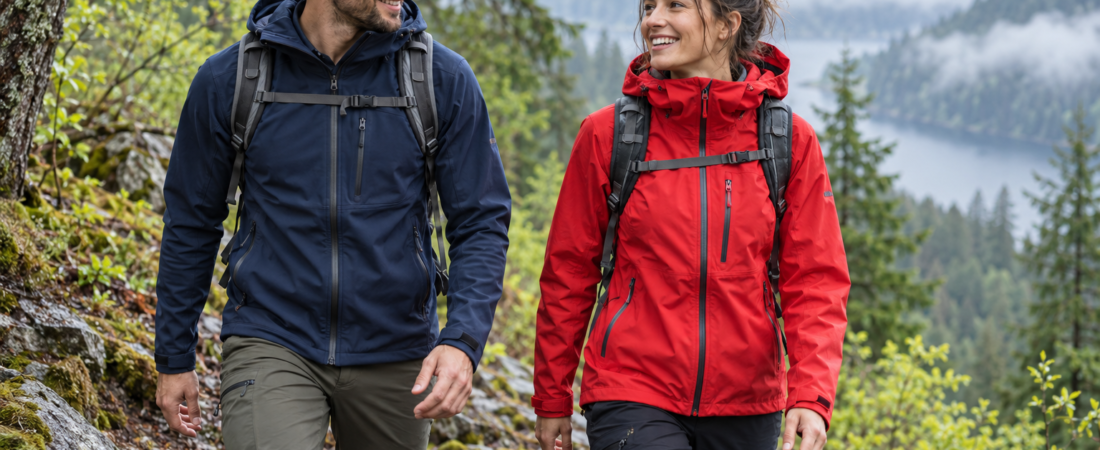
Team jackets work best when the garment matches the day ahead. A softshell can feel comfortable on a brisk walk or active event; a hardshell is the better starting point when sustained rain is part of the brief. The choice is less about which jacket is “better” and more about where your people will wear it.
Start with the conditions, not the logo
Before comparing fabrics, write down the season, location and activity. Will the team be moving for hours, standing outdoors at an event, commuting between venues, or working through wet weather? Ask whether the jacket will be worn over a shirt, a fleece, or both. Those answers shape the shell, fit and features far more than a color swatch does.
When a softshell makes sense
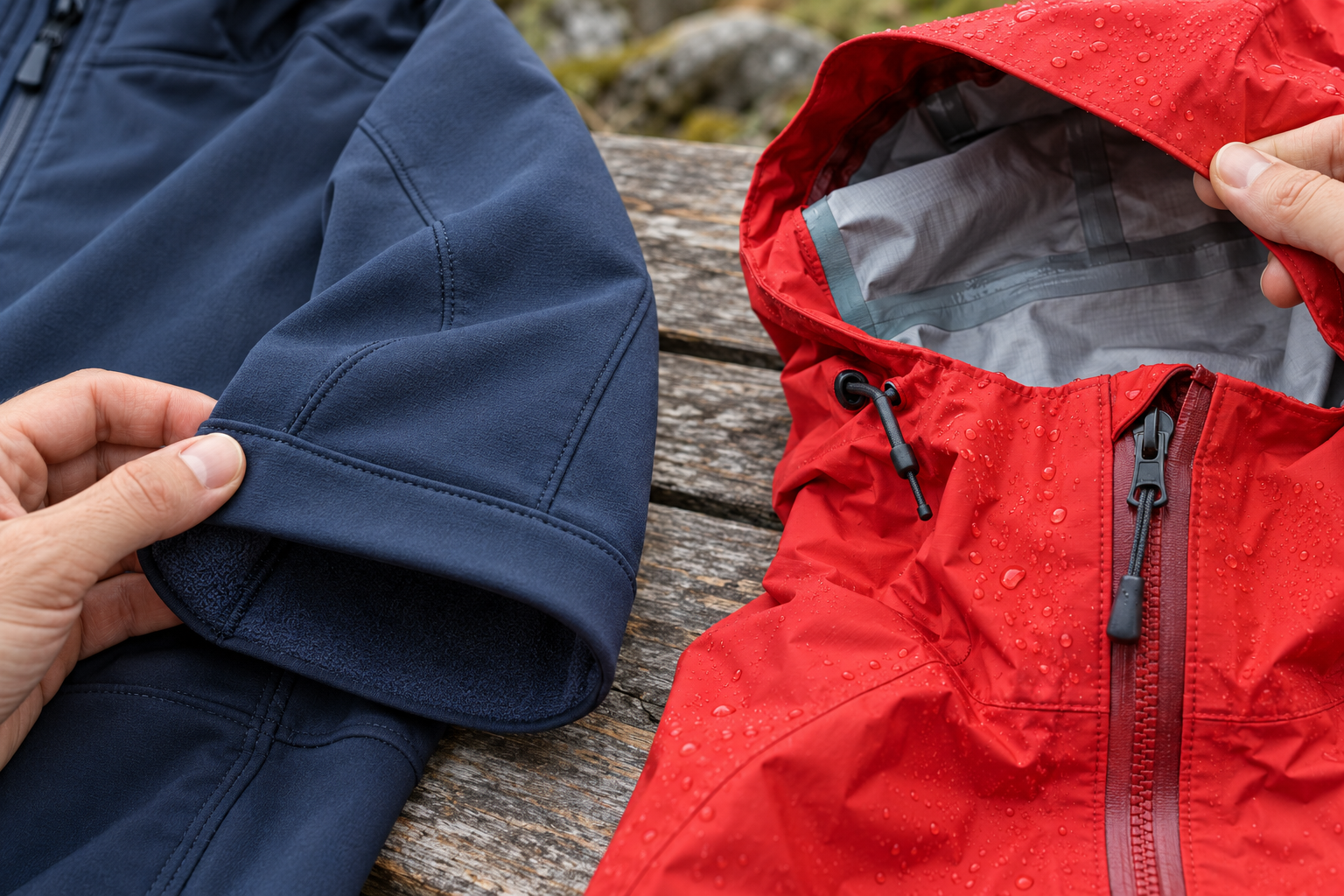
Softshell jackets usually prioritize stretch, freedom of movement and breathability. They suit active teams in cool, dry or changeable conditions: guided walks, travel, outdoor events and everyday team wear. A fleece-backed option can add comfort in cooler weather. Many softshells resist light moisture, but they should not be treated as a substitute for a specified waterproof rain shell.
For a branded team jacket, consider how the fabric moves at the shoulders and elbows, whether the cuffs stay comfortable through repeated activity, and whether pockets remain usable when someone carries a bag. A clean chest logo and coordinated colors can make the jacket easy to wear beyond a single event.
When a hardshell is the stronger choice
A waterproof hardshell is designed around rain and wind protection. It is a practical choice for teams that expect prolonged wet weather or need a dependable outer layer over other clothing. The exact result depends on the chosen fabric, seam construction and garment details, so specify the performance you need during the sample stage rather than assuming every “hardshell” is identical.
Check hood coverage, cuff adjustment, hem control, pocket access and room for a midlayer. A sample should be tried on while walking and reaching, not only while standing still. If the team will alternate between rain and dry periods, also think about how easily the shell can be carried or layered.
A quick decision guide
- Active days with occasional light moisture: begin with a breathable softshell.
- Extended rain or exposed, windy locations: specify a waterproof hardshell and review the seam details.
- Mixed seasons and changing temperatures: consider a shell with a removable fleece or insulated liner.
- Several job roles: one coordinated color and logo system can span more than one jacket style.
Make the sample do the hard work
Whatever shell you choose, approve a physical sample before bulk production. Check the feel of the fabric, layering room, size range, pocket positions and logo scale. View the branding both close up and from a few steps away. Record any revisions in the approved specification so the production team has a clear reference.
Ruiniu develops custom softshell, hardshell and 3-in-1 jacket options for corporate teams and outdoor activities. See our design and sample process, or send your team brief to discuss the right starting point.
Further reading: REI’s guide to rainwear and shell types.