
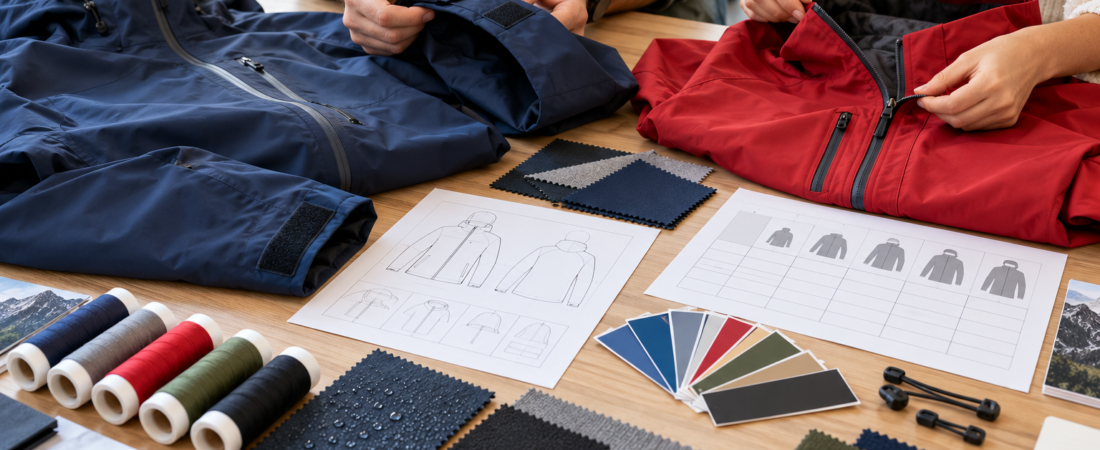
A custom jacket project gets easier when the first conversation is specific. A short, well-prepared brief helps everyone discuss the same garment, from the people who will wear it to the team approving the sample. Use this guide to turn an idea into a clear request for an outdoor apparel manufacturer.
1. Describe the people and the setting
Start with the wearers, the activity and the climate. Is the jacket for a corporate retreat, a field team, a club, an event crew or everyday travel? Will people be moving continuously or standing outdoors? Note the season, typical weather, and what they will wear underneath. A jacket intended for active spring days needs a different balance of mobility and protection from one intended for wet, windy conditions.
2. Choose the jacket direction
Choose a starting point rather than trying to decide every construction detail at once. A softshell emphasizes comfortable movement and breathability for active use. A specified waterproof hardshell focuses on rain protection. A 3-in-1 design combines an outer shell with a removable liner for a wider range of temperatures. If your group has different roles, one shared color and branding plan can connect more than one jacket style.
Our outdoor jacket collection shows the three directions. If you are deciding between shell types, read our softshell versus hardshell guide.
3. Prepare quantities and a realistic size plan
Share your estimated total quantity and a provisional size breakdown. Say whether you need different fits and whether a fleece or other midlayer must fit underneath. If you do not yet know every size, say so; it is better to flag an estimate than to treat it as final. Use the sample stage to review movement, sleeve length, hem coverage and the size range before approving bulk production.
4. Make branding decisions visible
Send a clear vector logo if you have one, along with your preferred colors and any brand guidelines. Identify where the mark should appear: chest, sleeve, back or another position. Consider how it looks at actual garment scale and whether it remains legible against the chosen fabric. If different teams need names or identifiers, include that requirement early so it can be assessed during design and sampling.
5. Review the details in a physical sample
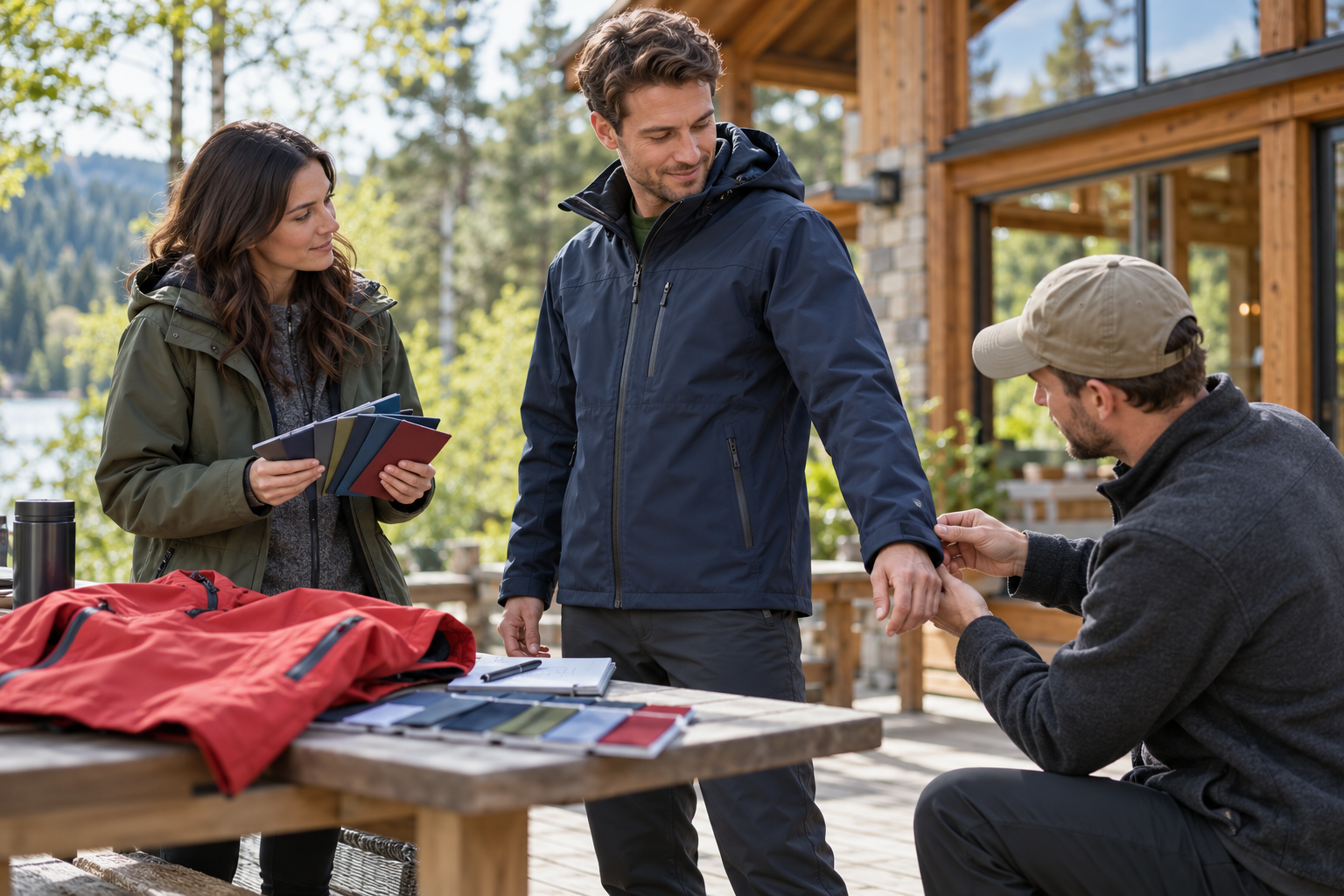
Fabric feel, hood shape, pocket access, cuffs, zippers and layering room are easier to judge on a real jacket than on a screen. Ask the intended wearers to try the sample in the positions they actually use: walking, reaching and carrying equipment. Record the approved fabric, colors, measurements, branding and any revisions in one final specification. That approved sample becomes the reference for production checks.
A brief you can send today
- Team and use: who will wear the jackets and for what activity?
- Conditions: season, expected weather and layering needs.
- Style: softshell, hardshell, 3-in-1 or still deciding.
- Order: estimated quantity, fits and provisional size range.
- Branding: logo file, colors and preferred placement.
- Review: sample approver and any must-have garment details.
Ruiniu’s customization process moves from design and proof to sample approval and bulk production checks. Send us your brief to start a practical conversation about your team jackets.